Decentralized Rural Electrification
Minigrids for Rural Electrification
Design and optimization of PV-BESS-DG minigrids for isolated rural communities
IEC 62257 series of standards for structure and dimensioning of the minigrids
Modular and scalable design of autonomous renewable energy systems for rural populations in remote sites consisting of residential neighborhoods, healthcare units, educational institutes and community centers
– Complete engineering of hybrid off-grid systems with multiple energy resource points
– Seamless integration of hydro and wind micro generators into the minigrid
– Design of the electrical distribution microgrid for serving power to consumers
– Design engineering of the micro distribution grid with long-run MV cables in large
community minigrids
– Minigrid Projects development and lifecycle management
– Sizing and selection of equipment for the rural electrification projects: PV modules,
off-grid inverters, battery storage, engine gensets and Balance of System components
– Use of GIS tools for the development of project sites
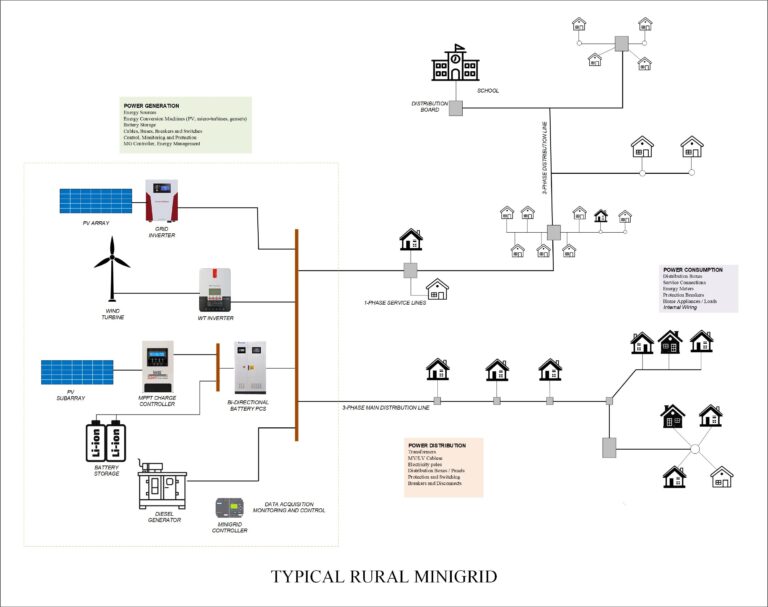
– Architectures of Minigrids for remote off-grid communities
– Energy production sub-systems
– Protection of humans and property from Electrical Hazards
– Quality Assurance for Project Design and Implementation
– Public service (public lighting, pumping stations, health centers, places of worship, public buildings)
– Business activities –, micro industry: grain milling, repair workshops, wood cutting and carpentry
– Renewable Generation: Solar, wind, hydro systems
– Hybrid production: PV-DG with battery storage
– Community Electrification Systems –micro-hydro station powering a microgrid
– Detailed functional and performance analysis of Rural Electrification Designs
– Engineering of MW-scale minigrids with multiple energy sources, MV/LV power distribution, and both AC and DC loads
– Synchronize and manage power-sharing between generators and inverters connected in parallel
